Monday, March 16, 2020

water birds

Great BLue Heron

Ibis

great blue heron

anhings drying wings

Duck

duke in flight

Great LBue heron waiting for twigs to finish the nest

Great Blue heron taking off - tired of waiting

taking off

either taking off or landing - don't remember

I
Ibis

taking the plunge

white egret fishing

White egret caught a fish

white egreat taking fish to the dinner table

Odds and Ends - a baby great horned owl

A baby great horned owl

either mom or dad great horned owl watching over the little one

astro photos and macrohover flies at aldermans ford nature preserve

march 16 moon - 70-300mm @ 300 mm  NIkkor lensand Nikon D500

star trails around Polaris from my back yard - with a few treetops 81 22 sec exposures 
Nikon D7500 Tokina 11-15mm f2.8 lens @11mm
posterior view of the hoverfly

I first thought this a bee an later realized its the smallest hoverfly I've ever encountered.  never hovered only hopped from one cblossom to another 

Anterior view of the hoverfly and huge compound eye

dorsal view of the hoverfly looks just like a bee but no pollen on its legs

Tuesday, May 28, 2019

May 28, 2019: Progress on the Astrophotography Front: Part 2

Progress with Star trails, Nebula and Galaxies and the Milky Way

Rotation around the celestial north poleNikon D500 o4 D7500 TOKINA 11-15MM F2.8 LENS @11MM TAPED FOCUS AT INFINITY USING LIVE VIEW TO ADJUST FOCUS SO SSTARS WERE A POINT.

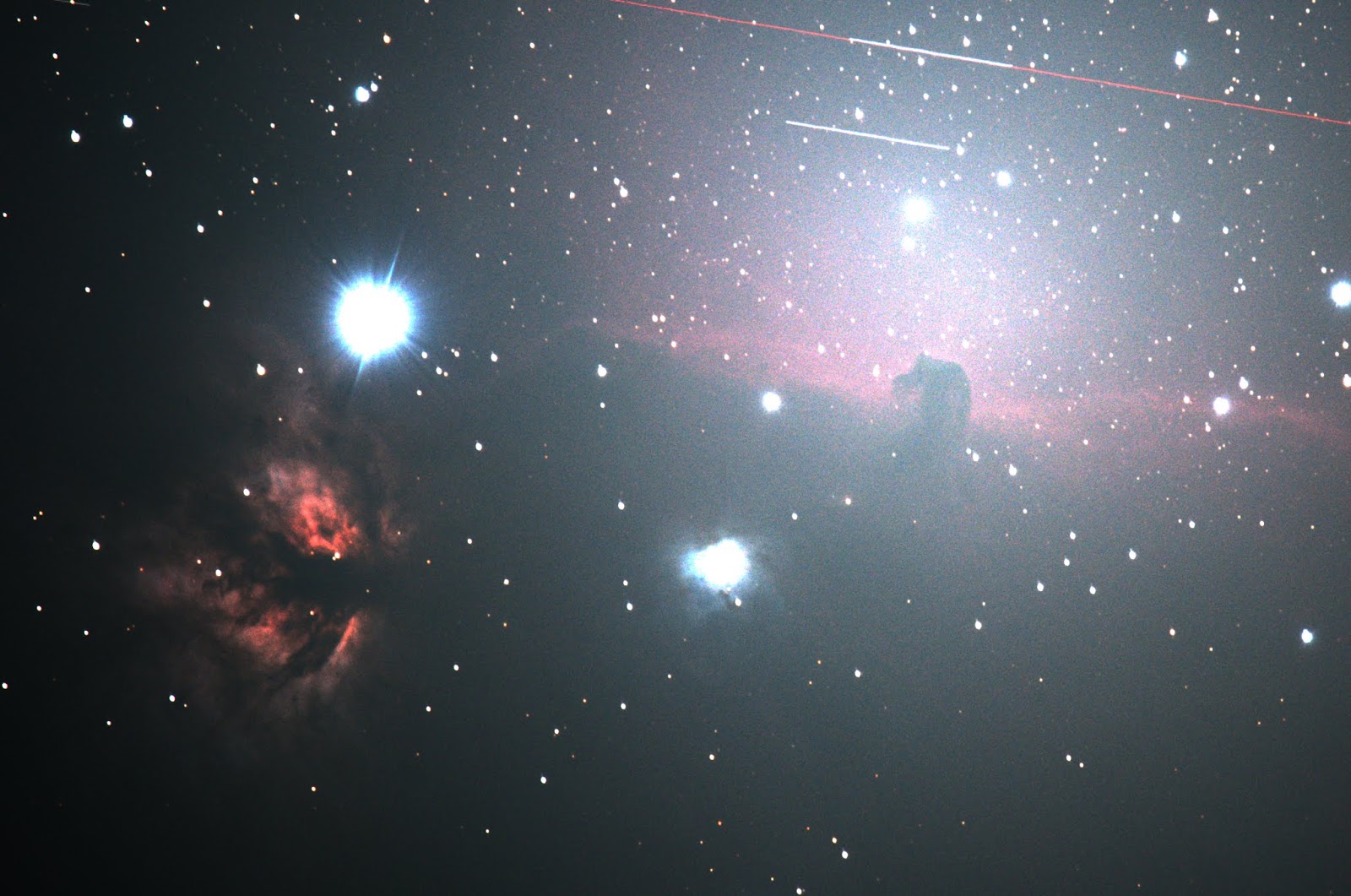
flame nebula + Alnitak+ Horsehead nebula imagestacking (10 20 sec exposures) to reduce noise and improve signal to noise ratio


More star trails Nikon D7500 Tokina 11-15mm f2.8 lens a@ 11mm exposure time of 20 sec ISO 400.


MIlky Way

Milky Way and Jupiter and fishing boats


MIlky Way + Jupiter + Saturn

Milky Way over Atlantic Ocean Jupiter and fishing boats


Whirlpool Galaxy


PInwheel Galaxy

M51and M52

 PInwheel Galaxy

May 28, 2019: Progress on the Astrophotography Front: Part 1

Astrophotography is a huge challenge.   In retirement, overcoming all the little challenges will keep me actively engaged for probably several years.   I've learned a lot in the past 6 or 7 months -  how to align an equatorial mount withe the celestial north pole, how to  align with enough stars (3) to have adequate tracking.  how to focus on things you can't see (i.e. how to use liveview in low light situations) - and the biggest challege of all:  post processing images.   

What I've learned is that capturing the images is about 20% of the task.  The other 80% is aligning and post processing.   Three tools that stand out are Astrometry  (a tool for figuring out where your image is located in the heavens above and annotating significant objects in your image,  Sequator (a Deep Sky Stacker equivalent)  for aligning and stacking images and Roger Clark's rnc-color-stretch for post process an aligned and stacked image.  For making star trail images, I used StarStax. The challenge with post processing is taking an image with a small range of intensities (from the image histogram) and stretching it to bring out the details without destroying the colors.  Clark's essays about all things about astrophotography are insightful and provacative. 

My camera skills are also dramatically improves.   There are so many things to understand when photographing the sky: how long an exposure (to minimize trails and maximize the signal/noise ratio), what ISO (turns out that the same image taken for different ISO values usually does not reveal a graded change in noise - and some cameras are ISO invariant (Sony A7).  Then there is the challenging of focusing in low light and maintaining focus over several hours of imaging - and the environmental challenge is eliminating condensation on the lens / filter.  

Here are recent images highlighting what I've learned: